AI Won't Replace Mixing. It Will Give It Back.
The era of the mouse is over. The era of the ears begins.
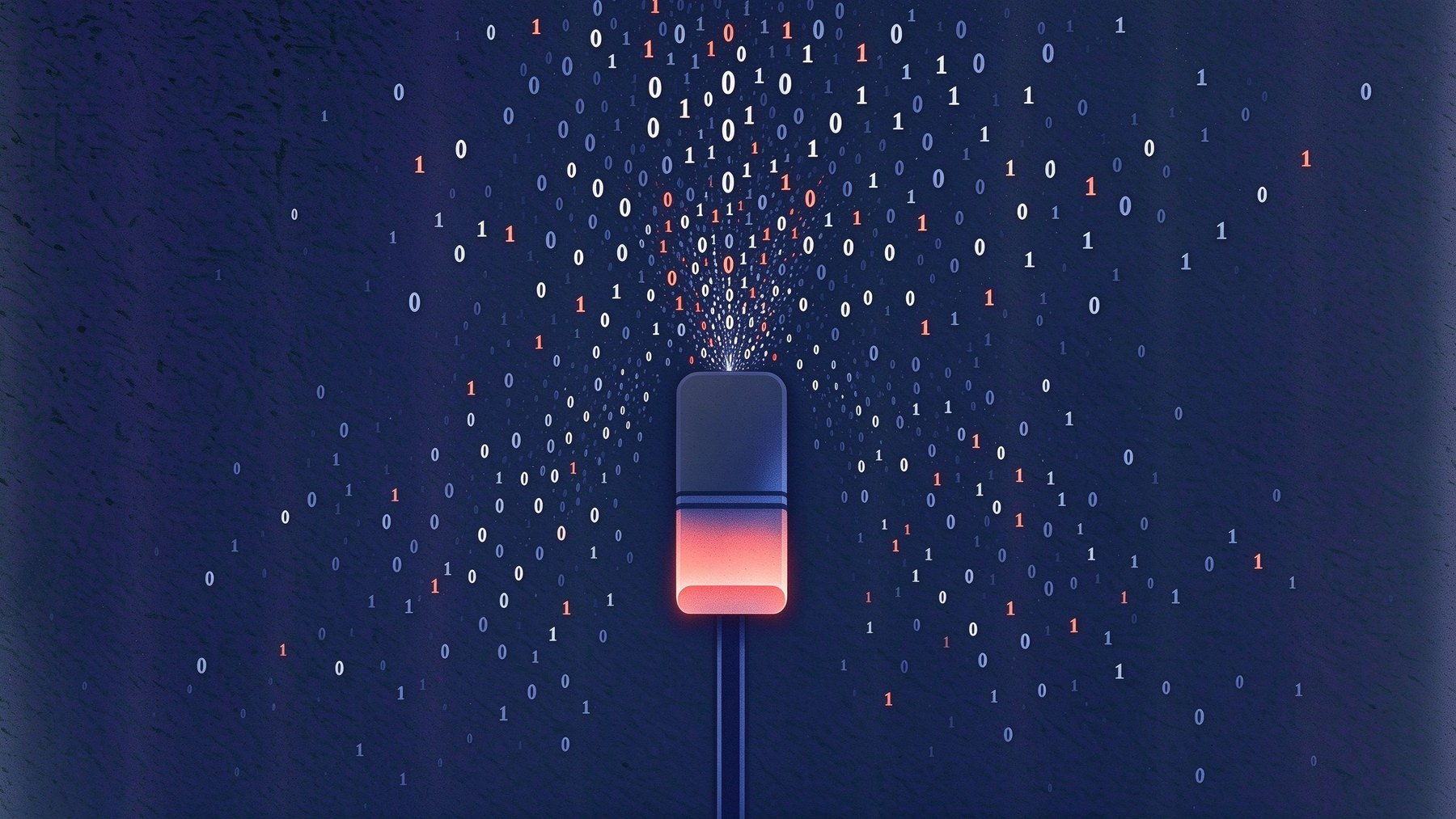
You expected another story about AI replacing the mix engineer? No.
Everyone is talking about AI replacing things. Replacing the mix engineer. Replacing judgment. Replacing people. We reject that framing entirely.
The greatest gift, and the price it charged
Before the computer, mixing was touch — the console was an extension of your hands.
The engineer's brain reached the music through the gear, not around it. The console and the outboard never stood between the engineer and the sound. They were where the two met — where the sparks were made.
But let us be clear about what the digital era gave us. In 1991, Pro Tools moved the machine room into the box. In 1992, Waves opened the door to third-party plug-ins. A session today is a universe of possibility the analog era could never have imagined — thousands of plug-ins, unlimited tracks, instant recall, undo. We would not trade it for anything.
But every gift has a price. The price of the digital era was attention.
After the computer, mixing became operating a computer — with your ears as a side effect. The craft of judgment, the part of mixing that is actually mixing, sank into the machinery around it. Engineers did not stop being good at mixing. They stopped being able to get to it. The interface is not a tool anymore. It is a cage.
You hear the rough mix and you cannot wait to start. Instead: track order, groups, routing. None of it is mixing. All of it is the mire — the toll you pay before you are allowed to touch the music.
The kick drum is wrong. You open a compressor and your eyes take over: -18.6 or -19? Ratio 2.3 or 2.5? Slower attack — a gentler curve. Mid-drag, it hits you: where did my ears go? Why am I mixing with my eyes? Did I even listen to the kick?
You had an idea — copy the guitar part, reverse it, add some effects, make it hit harder. Forty minutes of clicks and drags. It does not work. New plan, another forty minutes. The idea has cooled. Your head is numb. And somewhere in there you ask yourself: what am I even doing?
The mire is sticky. It holds your ankles. And it does not want your time — it wants your attention, which is worse. Time you can budget. Attention you cannot get back. The mire is the work. And for thirty years, it has been the work we did instead of mixing.
What AI is for — and what it is not for
We say it plainly: the greatest value of AI right now is not replacing mixing. It is getting us back to it.
The mire — the organizing, the routing, the parameter-hunting, the endless tweaking — is exactly what a machine should do. It is mechanical, rule-bound, and it devours human attention. AI is perfectly suited to it. Let the machine stand in the mire. Let the human stand in the music.
That is the honest case for AI in the studio, and it is bigger than any hype: not machines that mix better than people, but machines that stop the endless operating — so that people can mix at all.
We are not building an AI that mixes for you. We are building an AI that clears the way for you to mix.
The belief we hold
We cannot predict the future. Perhaps one day an AI will complete a mix on its own. Perhaps not. We genuinely do not know, and we say so.
This is not hope. This is the position we hold: human wisdom will always lead any technology.
Consider this: give ten engineers the same song, the same session, the same plug-ins — and you will get ten different mixes. All ten can be great. None of them is "correct." Each one is a judgment: what this song should be, where this sound should sit, how this moment should feel.
That is not a calculation. A calculation has one answer. A mix has a point of view.
A machine can imitate any of those ten results. It can learn every parameter, every move, every trick. What it cannot do is hold the reason behind the result — the why. And the why is the mix.
So everything we build, from the first line of code, is built to put control back in human hands. Not to replace the engineer. To return the engineer to the work only an engineer can do — to reach the music again, to touch it, to make more sparks than ever.
What we build
We did not build features. We built an exit from the interface.
Amia — the AI mixing assistant. Speak or type, and the session moves. Transport, editing, plug-ins, channels, groups, sends, I/O — the busywork that used to bury you, handled in one conversation, so your attention stays on the music. It obeys precise instructions, and it can advise — you describe what you hear, not what to click.
L3EQ and L3DY — plug-in hardware controllers. Some moments deserve fingers, not interfaces. Real touch rebuilds your direct line to the music — and between your fingers, the sparks of inspiration fly. No shell plug-ins, no wrapper software, no extra routing — connect them, open Pro Tools, open any plug-in, and start working.
The road ahead
Near: we march deeper into Pro Tools.
Next: we open the gates — Logic, Cubase, Studio One and more.
Join the revolution
AI is not here to replace you. It is here to give you back the mix.
Welcome in. Not as customers — as the first wave. Try Amia on Pro Tools for macOS. Get on the list for the controllers. Follow the build. Break things with us. Tell us what you hear.
— The Lang3 team, November 2026